
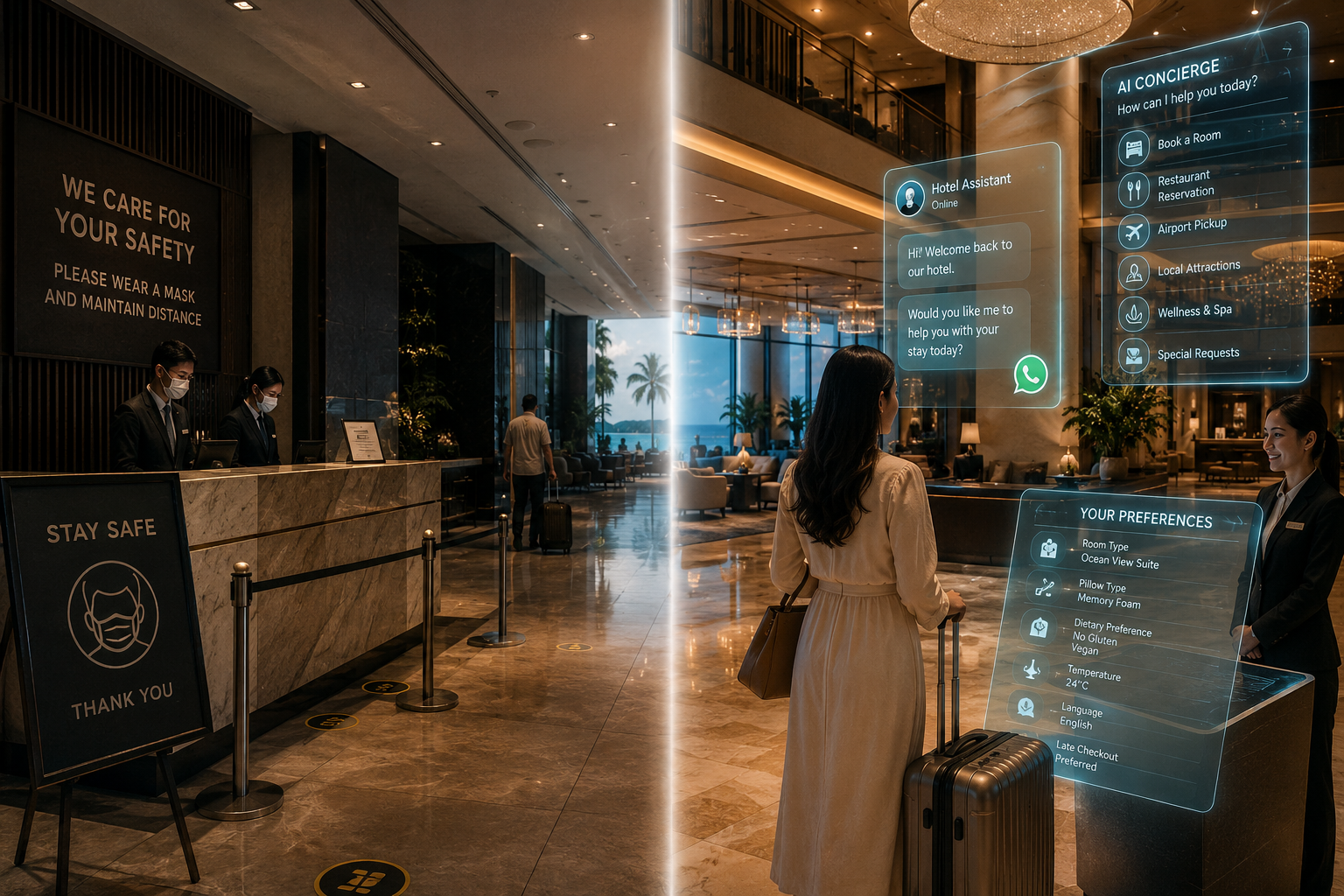
When people ask me about AI in hospitality, I always go back to the pandemic.
I worked on a chatbot project for one of Asia’s largest hospitality chains during one of the toughest periods the world had seen. Travel stopped. Hotels struggled. Customer support teams were overloaded. Guests were uncertain about bookings, cancellations, travel restrictions, refunds, food availability, safety protocols, and local regulations.
That was one of the moments where the world slowly started realizing something important.
Businesses cannot always depend only on human availability.
The pandemic became one of the biggest accelerators for AI adoption across industries. Hospitality was one of them.
At that time, we were building contextual chatbots integrated across WhatsApp, websites, booking systems, payment gateways, SOAP APIs, and customer support systems. What sounds simple today was actually extremely difficult back in 2020.
And honestly, that experience completely changed the way I look at AI.
How AI Chatbots Were Built During 2020

Back then, most hospitality bots were not truly intelligent.
They were intent based systems.
That means the developer had to manually train the chatbot to understand how a customer might ask a question.
If someone wanted to book a room, the system needed examples like:
- “I want to book a room”
- “Can I get a suite?”
- “Need a room for tonight”
- “Book a deluxe room”
- “Room available?”
- “Can I stay for 2 days?”
All these had to be manually trained into the system.
If the customer asked something outside the trained pattern, the chatbot would fail or route the conversation incorrectly.
The AI was not actually “thinking.”
It was following predefined conversational flows written by engineers.
In many ways, these bots were simply advanced applications wrapped inside a chat interface.
But despite all these limitations, they worked.
And more importantly, they solved a real business problem during a global crisis.
Hotels suddenly needed:
- 24/7 customer support
- Automated booking handling
- Cancellation processing
- Human handoff systems
- Multi-platform support
- Reduced operational pressure
The chatbot became a bridge between hotels and customers during uncertain times.
That was the moment I realized something important.
Even a rigid AI system could create massive operational value if it solved the right problem.
So imagine what today’s generative AI systems can do.
What Changed With Today’s AI
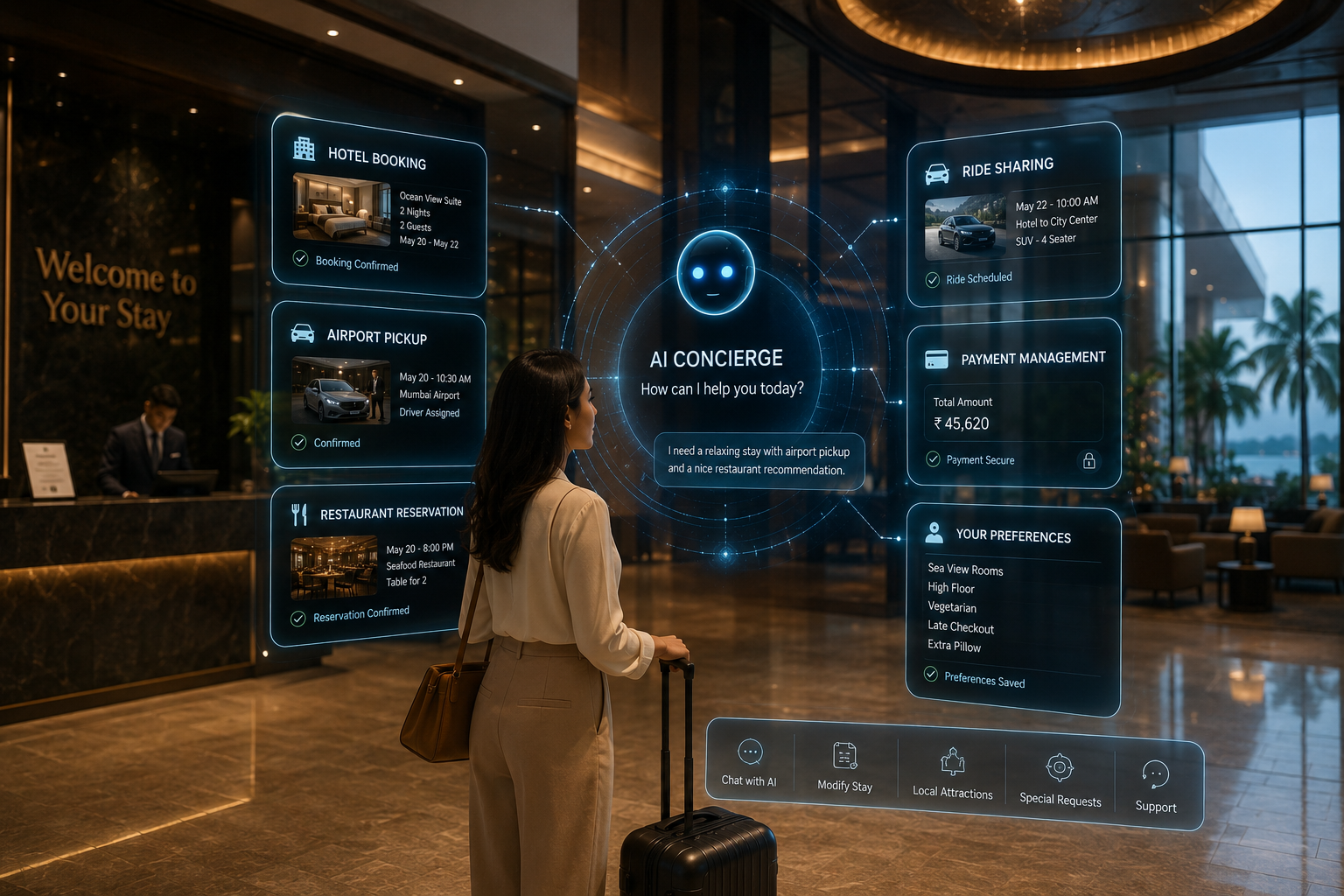
The biggest difference between AI in 2020 and AI today is understanding.
Older systems tried to recognize patterns.
Today’s systems try to understand meaning.
That changes everything.
Modern AI models no longer depend entirely on predefined flows. They understand context, memory, tone, intent, and conversational continuity.
A guest can now say:
“I’m planning a peaceful weekend with my wife near the beach and I need something private.”
A modern AI system can understand:
- the emotional tone
- the travel purpose
- the likely budget range
- the type of room required
- possible recommendations nearby
- transportation requirements
- dining preferences
That level of understanding was nearly impossible in traditional hospitality bots.
Today’s AI can also communicate with other systems directly.
A hotel AI can:
- talk to ride booking services
- connect with restaurant systems
- check weather APIs
- schedule airport pickups
- manage reservations
- summarize customer complaints
- talk with CRM systems
- coordinate with loyalty systems
This is where hospitality AI becomes much bigger than just a chatbot.
It becomes an intelligent operational layer.
Where AI Is Already Being Used in Hospitality Today
Personalized Guest Experiences
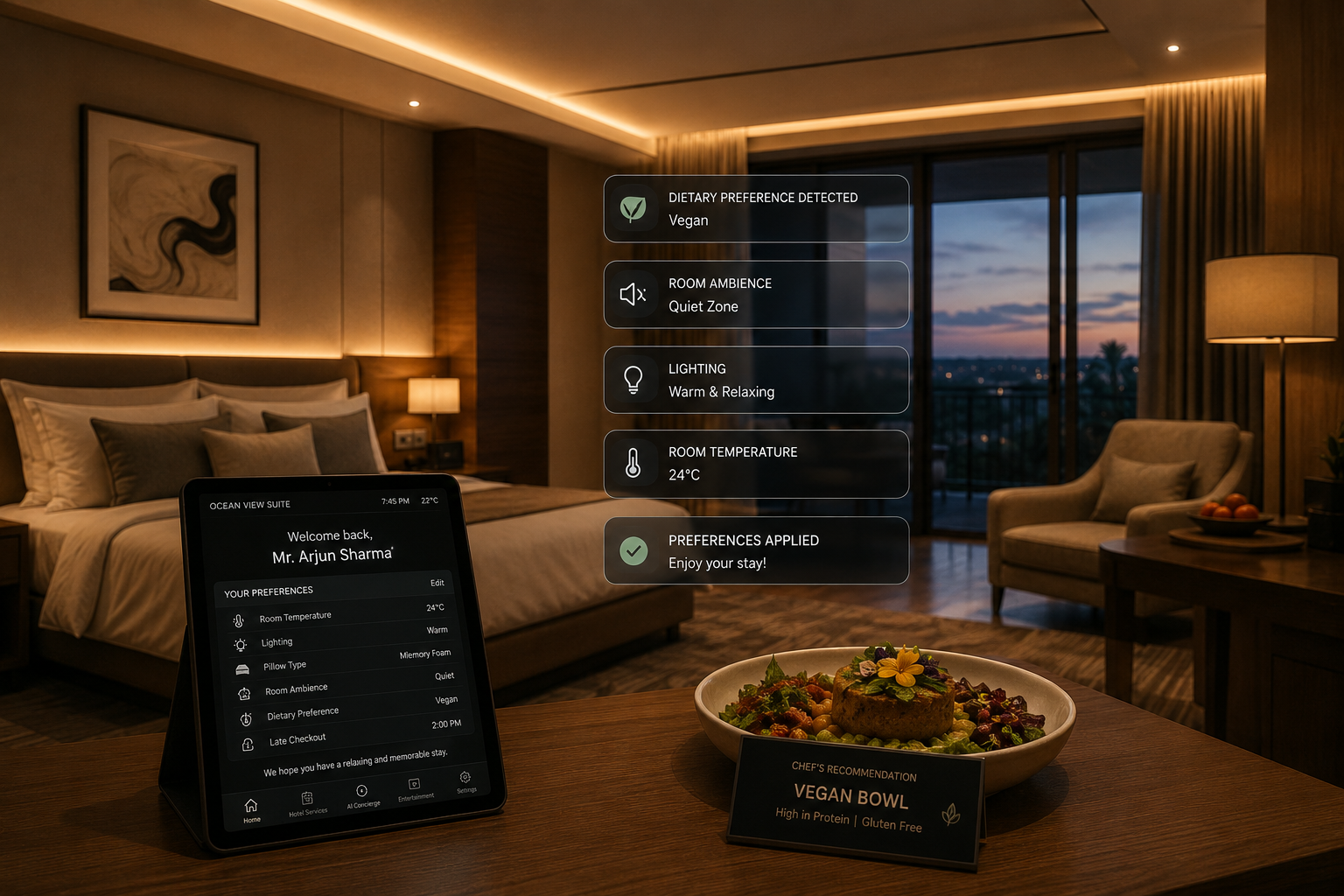
One of the biggest changes happening today is personalization.
Hotels no longer want every guest to feel identical.
AI helps hotels understand guest behavior deeply.
Imagine this:
- A guest always books rooms with city views.
- Another guest consistently orders vegan food.
- Someone else prefers quiet rooms away from elevators.
- Another customer regularly books spa packages and late checkouts.
AI systems can now track and understand these patterns automatically.
Instead of the guest explaining themselves repeatedly during every stay, the hotel already understands their preferences.
This creates something very powerful.
The guest feels remembered.
Hospitality has always been about making people feel valued. AI is now helping hotels scale that feeling.
AI Powered Customer Support
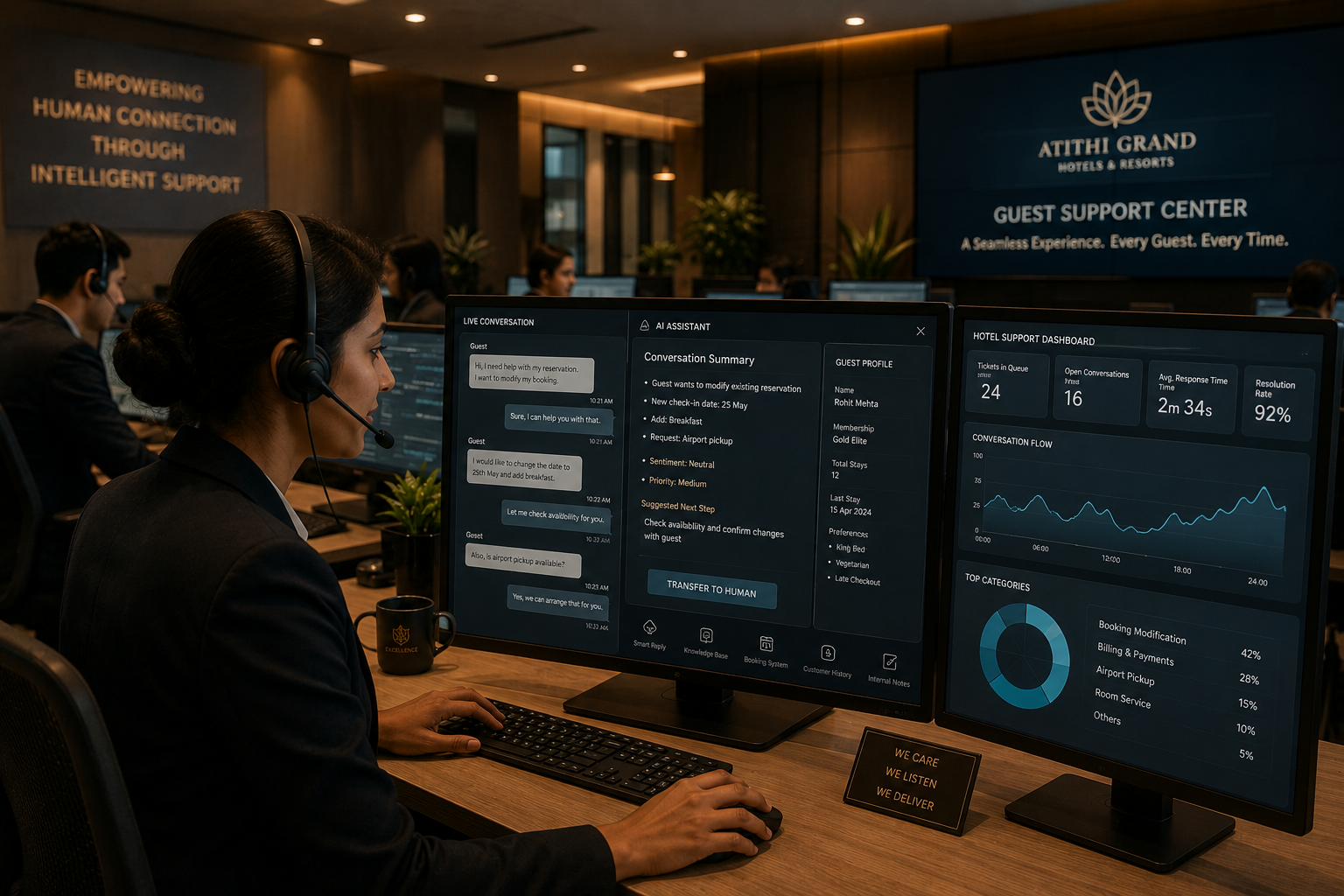
Customer support is another major area where AI has become deeply integrated.
Today’s AI systems can handle:
- room booking queries
- refund questions
- loyalty point issues
- multilingual support
- room upgrade requests
- event booking assistance
- food ordering
- travel guidance
And unlike older bots, modern systems can maintain conversational continuity.
The customer does not need to repeat information again and again.
More importantly, AI systems today can summarize conversations for human agents before transferring the case.
That means when the human staff joins the conversation, they already know the issue.
This reduces frustration dramatically.
The customer feels heard faster.
The employee works more efficiently.
This is where AI actually helps humans instead of replacing them.
Dynamic Pricing and Revenue Optimization
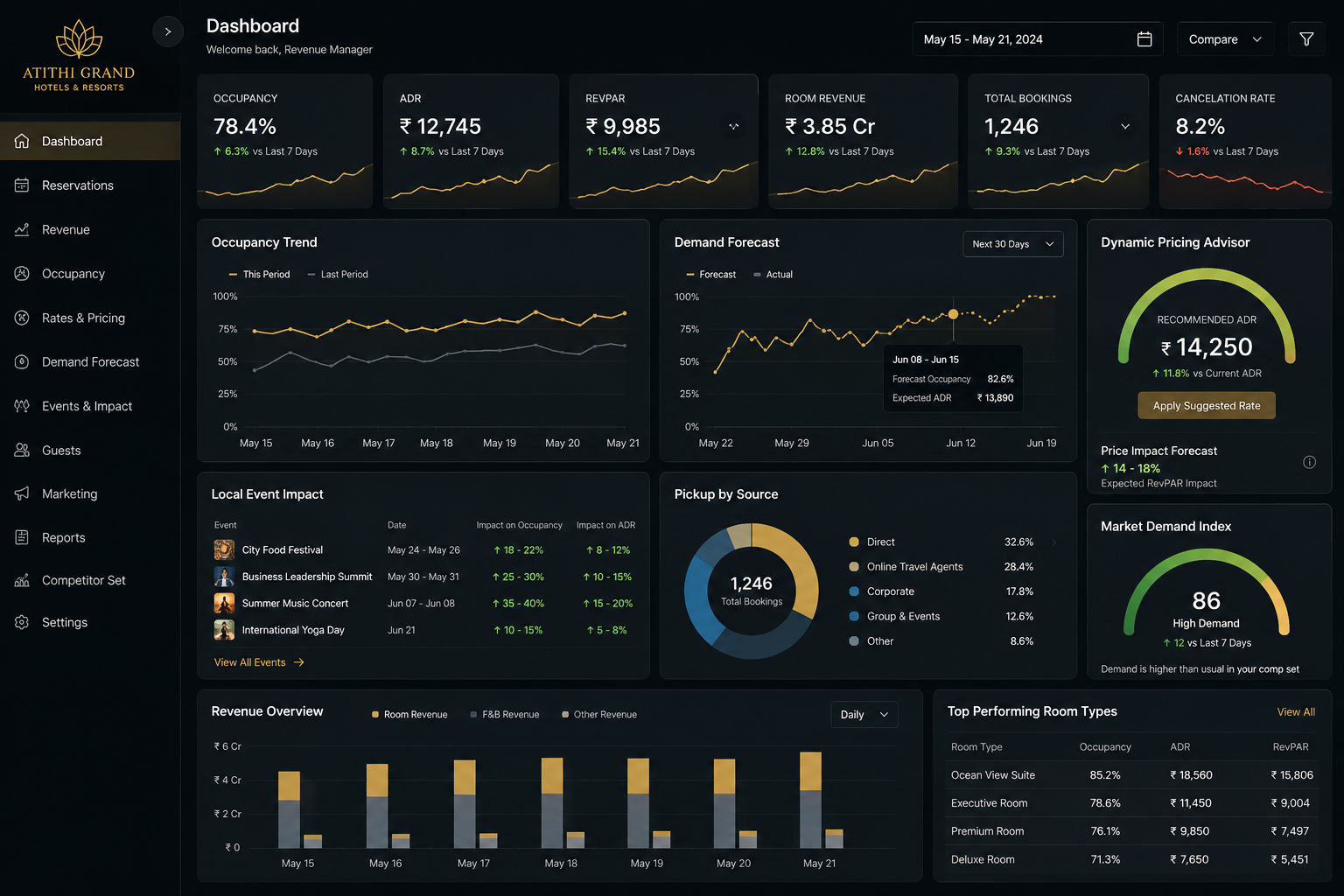
One of the less visible but highly impactful uses of AI in hospitality is pricing optimization.
Hotel pricing changes constantly.
During holidays, concerts, festivals, conferences, cricket matches, or tourism peaks, demand fluctuates rapidly.
AI systems continuously analyze:
- occupancy levels
- competitor pricing
- local events
- seasonal trends
- booking behavior
- cancellation rates
- customer demand patterns
Based on these signals, AI helps hotels adjust room prices dynamically.
This allows hotels to:
- maximize occupancy
- reduce empty rooms
- improve profitability
- offer targeted discounts
- predict demand spikes early
For guests, this sometimes means better offers.
For hotels, it creates operational efficiency.
Where I See Hospitality AI Going Further
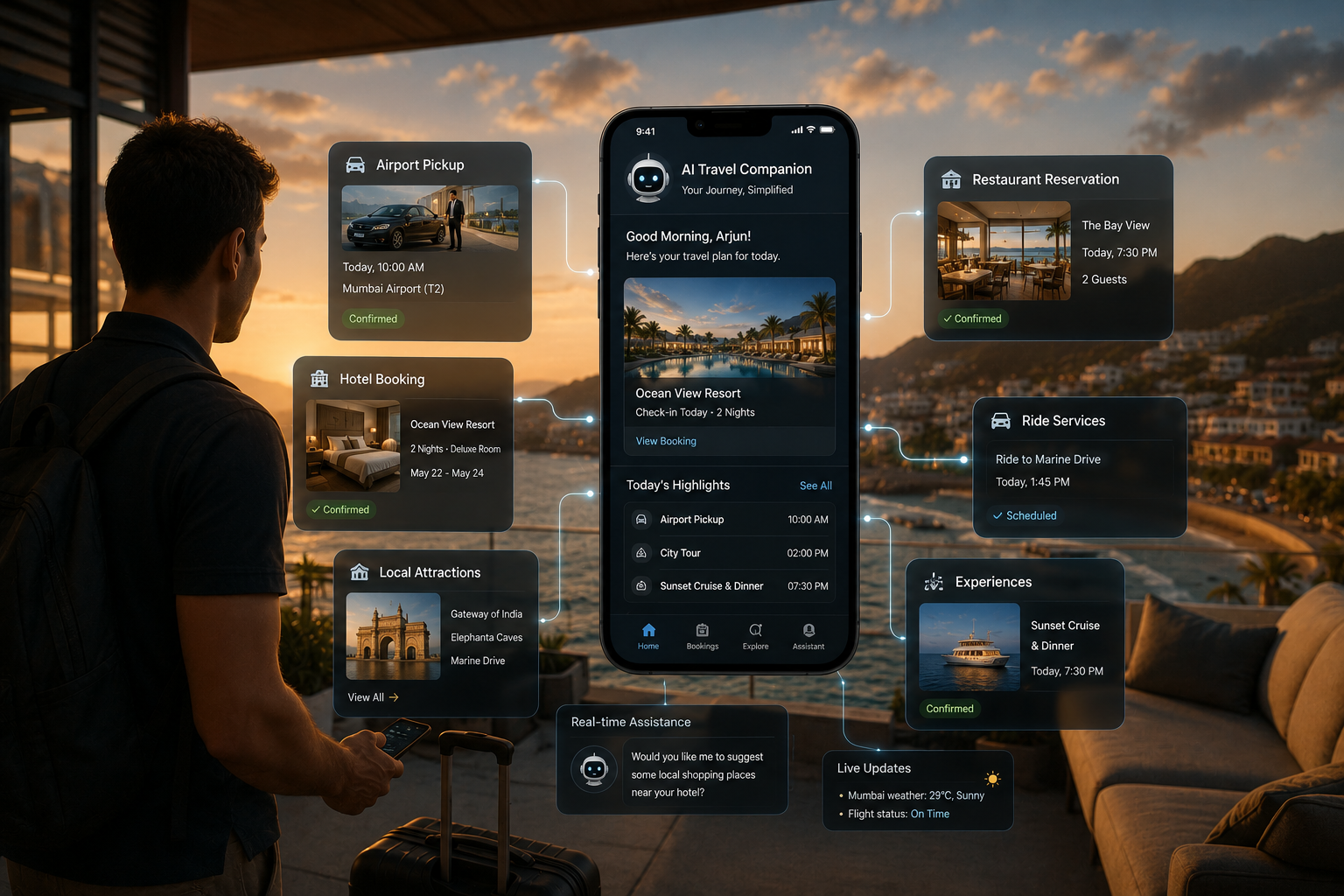
AI as a Full Travel Companion
One area I strongly believe hospitality AI will grow into is becoming a full travel ecosystem.
Today, hotels mostly focus only on the stay.
But travel is much bigger than the hotel room itself.
A traveler might need:
- airport transportation
- restaurant recommendations
- local tourist guides
- event bookings
- shopping suggestions
- local language assistance
- emergency help
- nearby attractions
Imagine arriving at a hotel and the AI already knows:
- your travel schedule
- your interests
- your preferred cuisine
- your budget
- your comfort preferences
Now imagine the AI planning your entire experience automatically.
Not just recommending places.
Actually helping you book them.
This creates opportunities not only for hotels, but also for surrounding businesses.
Hotels can become intelligent tourism hubs instead of just accommodation providers.
AI Driven Wellness and Health Experiences
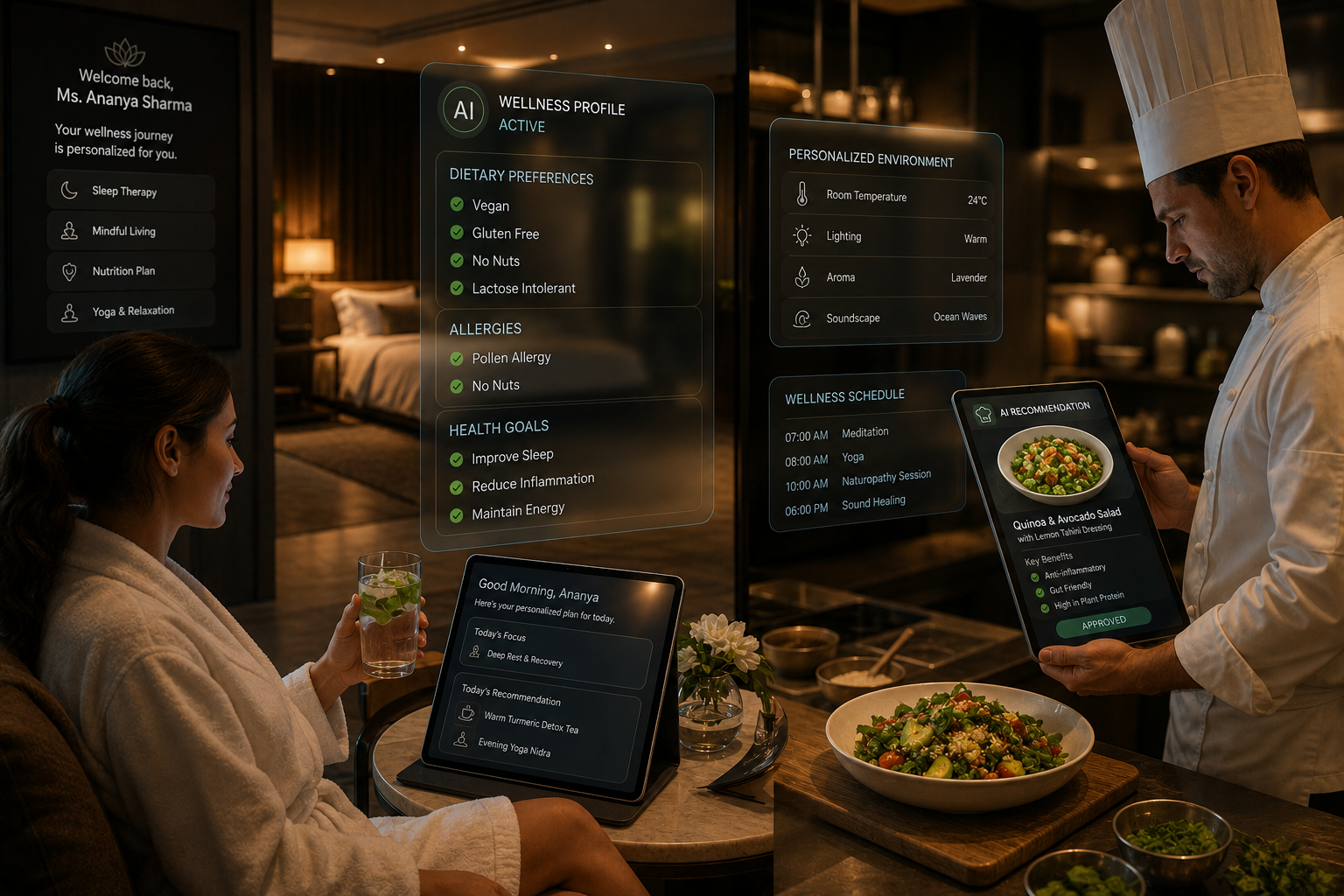
Another massive opportunity is wellness personalization.
People have allergies, medical conditions, food preferences, mental health sensitivities, sleep issues, and lifestyle habits.
Most hotels treat wellness as generic luxury.
But AI can make wellness deeply personal.
Imagine a guest mentioning:
- gluten allergy
- lactose intolerance
- anxiety issues
- sleep difficulties
- dietary restrictions
- diabetic food preferences
Now imagine the AI automatically coordinating this with:
- kitchen systems
- restaurant recommendations
- room preferences
- wellness packages
- emergency response systems
The guest no longer needs to explain themselves repeatedly.
The experience becomes safer and more comfortable.
In some cases, this can genuinely save lives.
That is where AI becomes more than convenience.
It becomes meaningful hospitality.
Cross Hotel Memory Systems
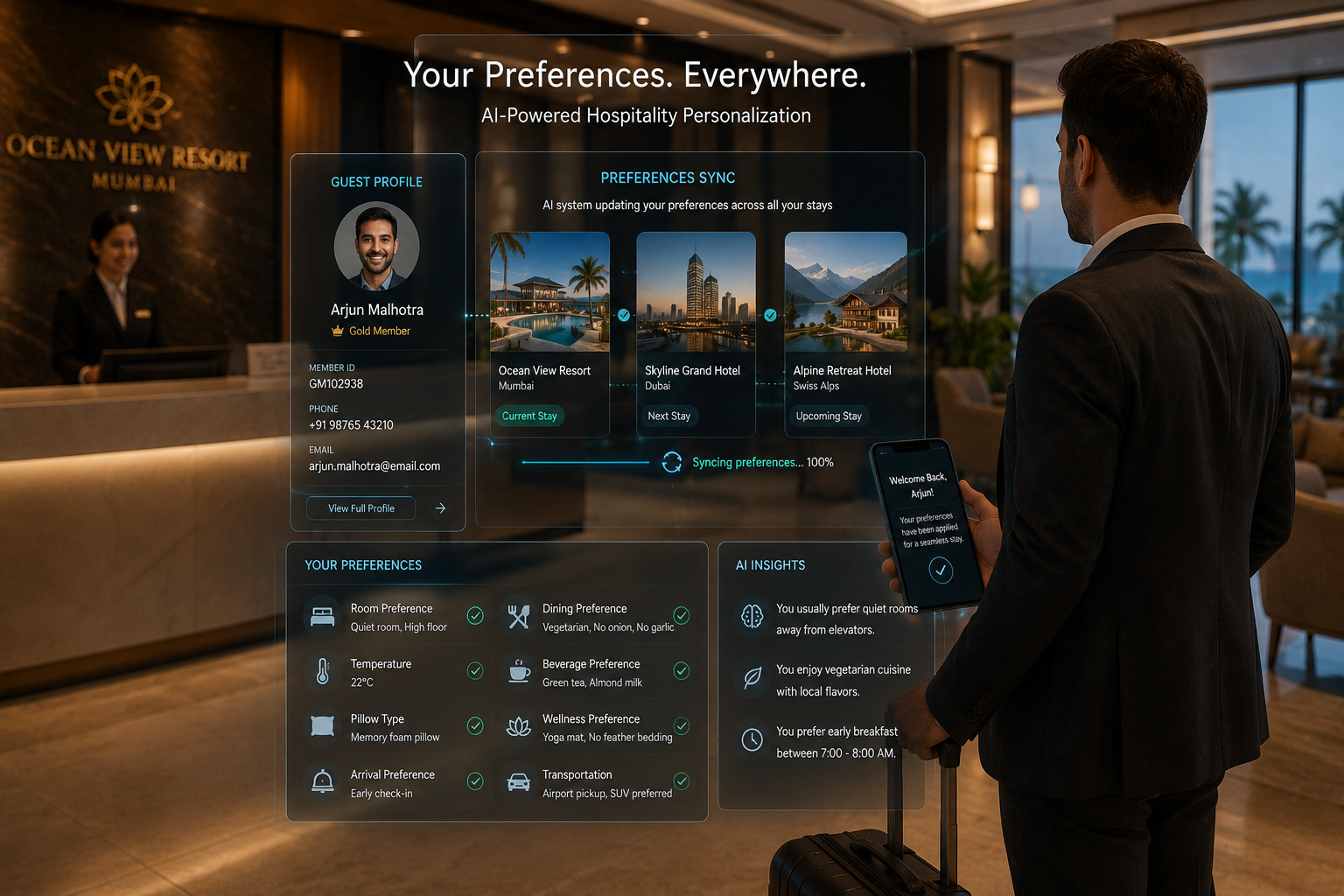
This is another area I believe will become huge.
Imagine staying at Hotel A and mentioning:
- you prefer quiet rooms
- you dislike overly cold AC temperatures
- you enjoy jacuzzi access
- you prefer vegetarian breakfasts
- you need late checkout flexibility
Now imagine visiting Hotel B under the same hospitality network.
The AI already understands your preferences.
You do not start from zero again.
The hospitality experience becomes continuous instead of isolated.
This is where AI starts creating relationship based hospitality instead of transaction based hospitality.
Humanoid Robots and the Future of Hospitality
When people hear robotics in hospitality, they immediately think humans will be replaced.
I honestly do not think that is the real direction.
Hospitality is emotional.
People still value human warmth, empathy, smiles, conversations, and care.
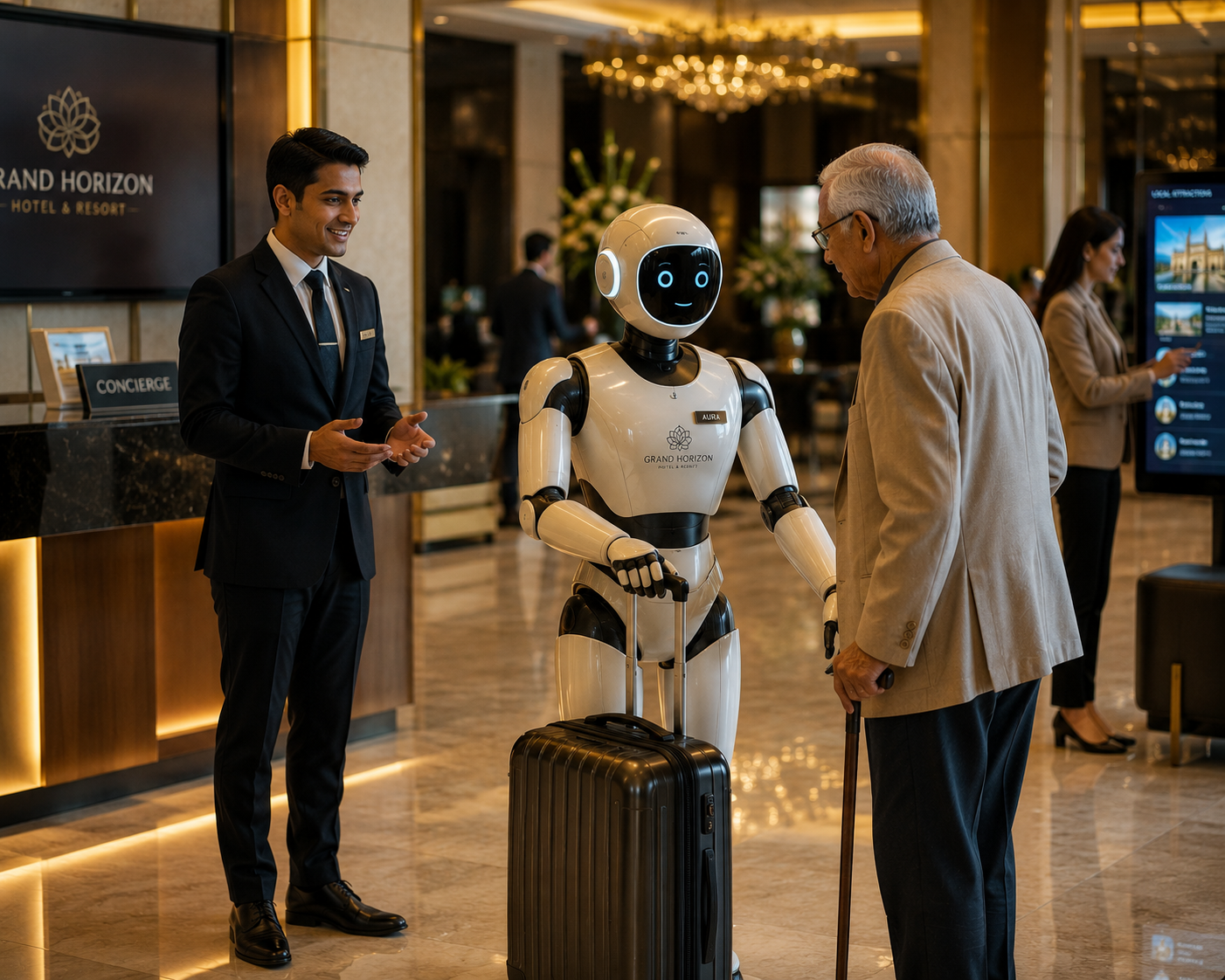
But humanoid robotics can assist operations significantly.
For example:
- luggage assistance
- room delivery services
- cleaning support
- multilingual guest interaction
- navigation assistance inside resorts
- airport style guidance systems
- automated concierge support
Imagine entering a massive resort and a humanoid assistant guiding you directly to your room while answering questions naturally.
Or a robot helping elderly guests carry luggage.
Or multilingual robotic assistants helping international travelers.
The goal is not replacing humans.
The goal is reducing repetitive operational pressure so humans can focus on higher quality guest interaction.
The best hospitality experiences will likely be a collaboration between humans and intelligent systems.
Final Thoughts
We started our journey in hospitality AI during the pandemic, when even basic conversational AI was difficult to build.
Back then, getting a chatbot to understand a booking request itself required enormous engineering effort.
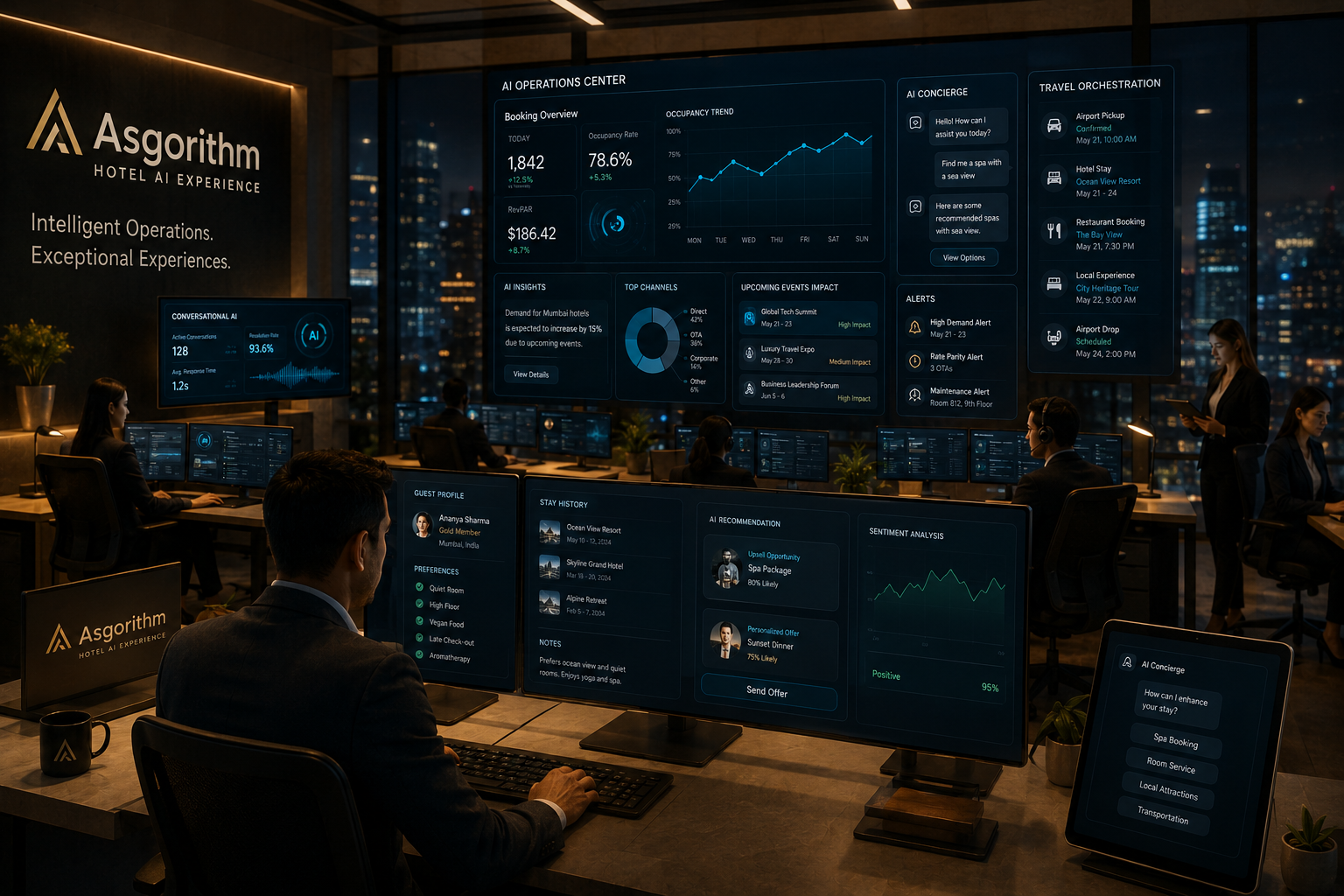
Today, AI systems can reason, understand context, interact with external systems, and create deeply personalized experiences.
And honestly, I still think we are only at the beginning.
Hospitality is one of the industries where AI can create genuinely meaningful experiences because hospitality itself is centered around understanding people.
At Asgorithm Technologies, we have already worked on hospitality AI systems integrated with APIs, booking systems, customer support workflows, and conversational platforms for large scale environments.
If you are a hospitality brand, hotel chain, travel company, or startup looking to build AI driven hospitality systems, intelligent customer support, operational AI agents, or future-ready hotel experiences, feel free to reach out.
Sometimes the best AI products are not the ones that replace humans.
They are the ones that help humans serve better.