
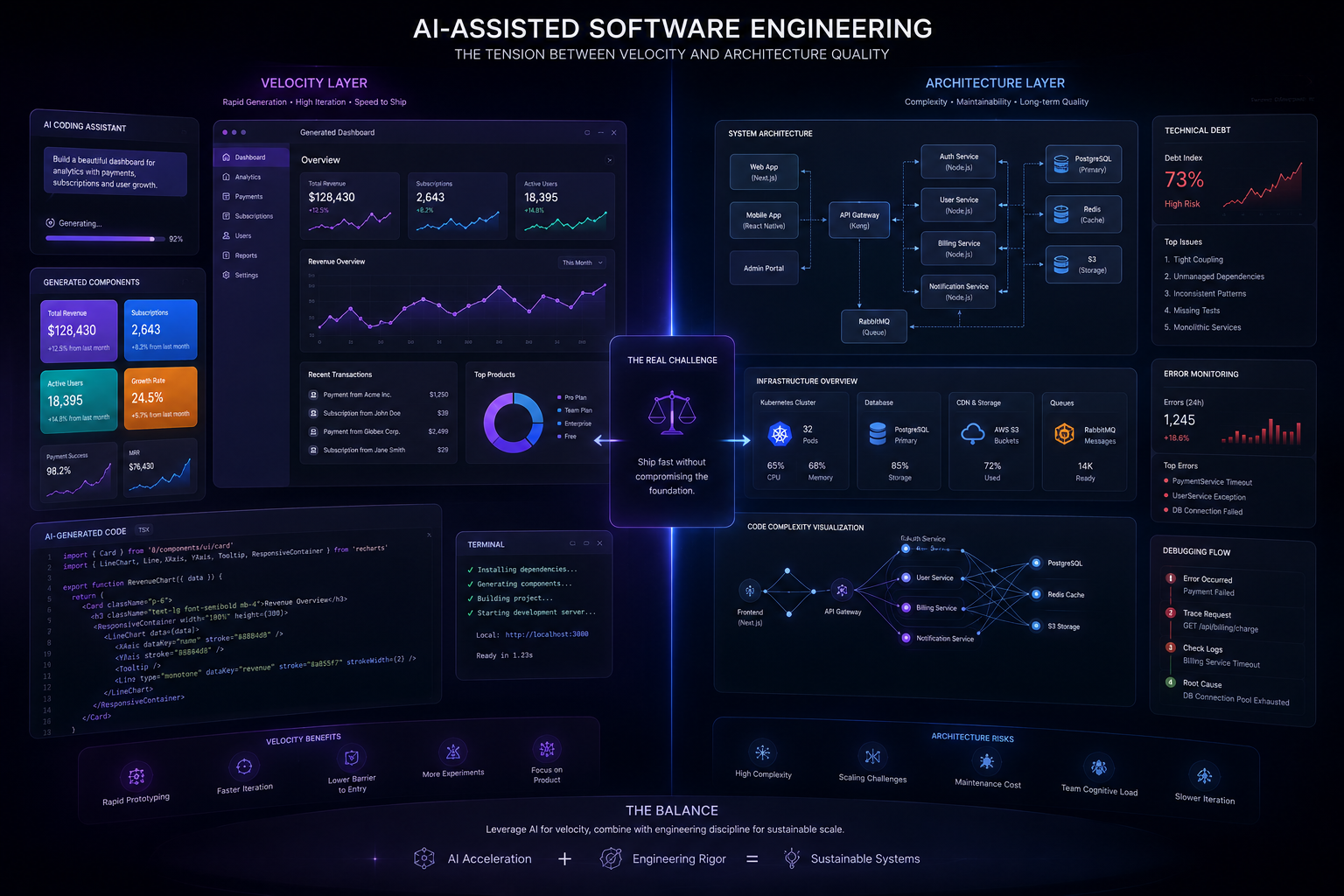
Software development is entering a fundamentally different phase.
For decades, writing software required deep familiarity with syntax, frameworks, documentation, debugging, and infrastructure patterns. Developers manually translated intent into code through structured engineering processes.
Today, large language models can generate applications, APIs, interfaces, infrastructure scripts, and even deployment workflows from natural language instructions.
This has introduced a new cultural phenomenon commonly referred to as “vibe coding.”
Vibe coding describes a workflow where developers rely heavily on AI systems to rapidly generate software through iterative prompting rather than traditional implementation-first engineering.
The idea is simple.
Describe what you want.
Refine it conversationally.
Ship quickly.
The appeal is obvious.
But the consequences are more complex.
The Rise of Conversational Software Development
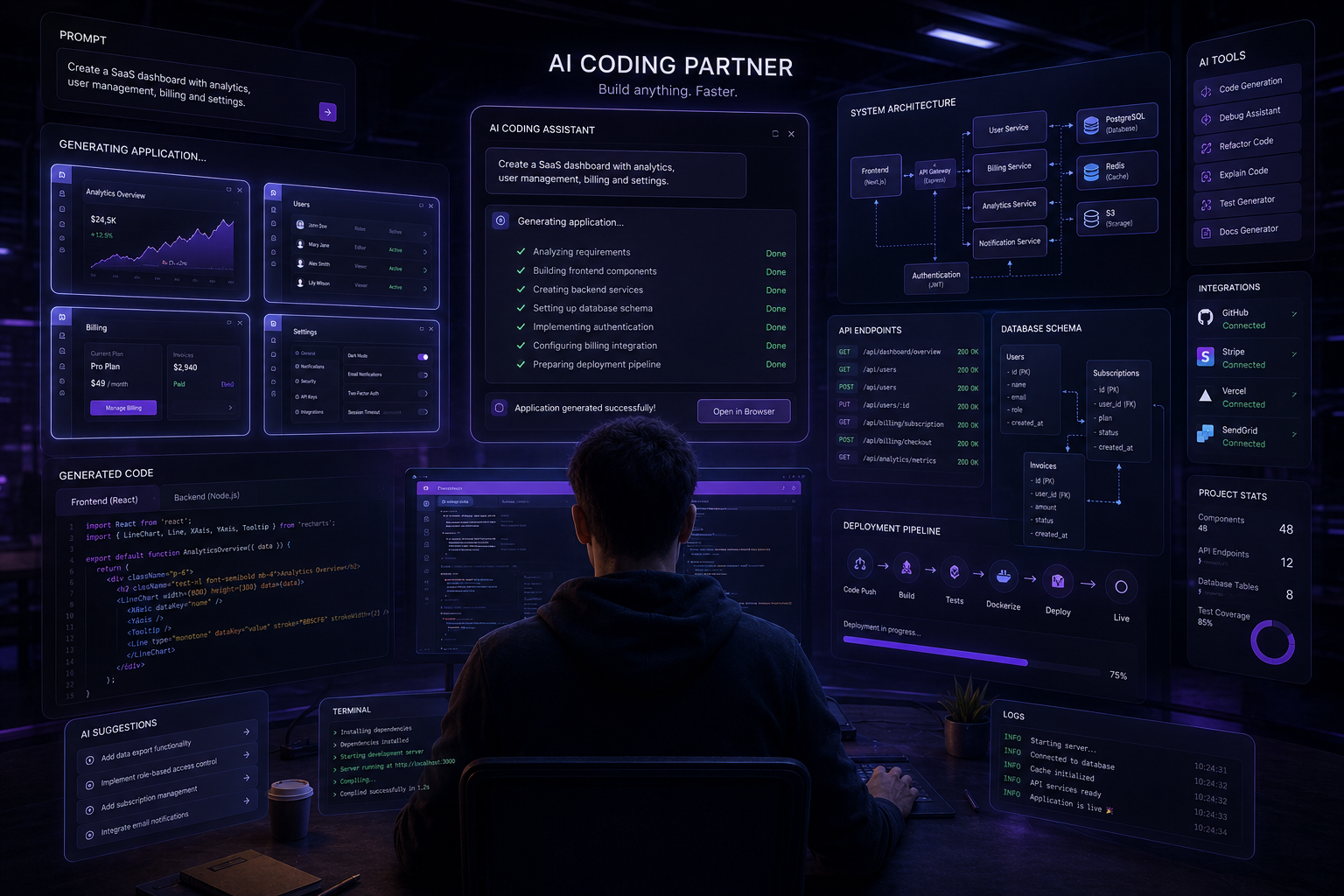
AI-assisted development tools have dramatically reduced the friction involved in prototyping.
Developers can now generate:
- Frontend interfaces
- Backend APIs
- Database schemas
- Authentication flows
- Deployment scripts
- Documentation
- Testing scaffolds
- Design systems
- Mobile applications
within minutes.
This changes the economics of software creation.
Historically, the early stages of development were expensive because every idea required implementation effort.
Now, experimentation itself becomes cheap.
This accelerates:
- MVP creation
- founder experimentation
- internal tooling
- rapid prototyping
- UI exploration
- educational learning
- startup iteration cycles
The speed difference is substantial.
A solo developer equipped with AI systems can now operate with leverage previously requiring small engineering teams.
Why Vibe Coding Feels Powerful
The primary advantage of vibe coding is velocity.
Instead of spending hours navigating documentation, developers can interact directly with generative systems capable of translating intent into implementation.
This creates several immediate benefits.
Reduced Cognitive Friction
Traditional development requires constant context switching.
Developers move between:
- documentation
- Stack Overflow
- terminal debugging
- framework conventions
- syntax references
- API specifications
AI systems compress many of these layers into conversational interfaces.
This allows developers to maintain conceptual flow for longer durations.
Faster Creative Iteration
Vibe coding is particularly effective during exploratory phases.
When developers are uncertain about:
- interface direction
- feature structure
- interaction models
- architecture possibilities
rapid generation becomes highly valuable.
The system enables experimentation before committing deeply to implementation decisions.
Democratization of Software Creation
AI-assisted development lowers barriers for:
- designers
- founders
- researchers
- students
- domain experts
People previously unable to build functional software can now prototype systems through natural language interaction.
This may significantly expand software participation globally.
Increased Productivity for Experienced Engineers
Contrary to popular narratives, experienced developers often benefit the most.
Senior engineers can:
- scaffold systems rapidly
- automate repetitive tasks
- generate boilerplate
- explore architectural variations
- accelerate debugging
- compress implementation time
while still applying engineering judgment.
The productivity increase can be substantial when combined with strong technical understanding.
The Hidden Risks of Vibe Coding
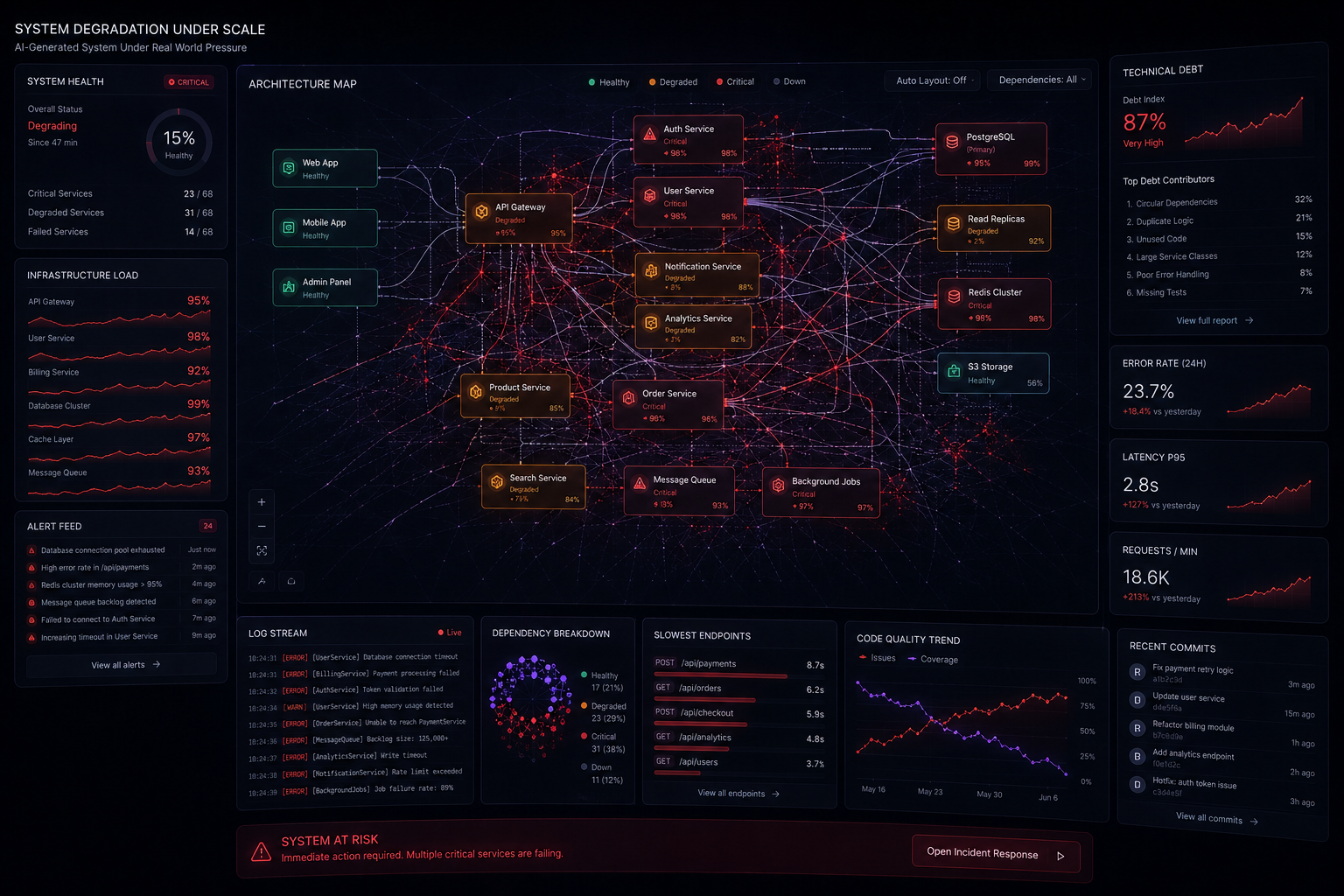
Despite its strengths, vibe coding introduces significant engineering concerns.
The biggest issue is that software complexity compounds over time.
Generating code quickly is easier than maintaining systems reliably.
Architecture Degradation
AI-generated systems often optimize for immediate functionality rather than long-term maintainability.
This may result in:
- inconsistent abstractions
- duplicated logic
- poor separation of concerns
- weak type safety
- hidden dependencies
- fragmented state management
- unstable scaling behavior
The system works initially.
But over time, technical debt accumulates rapidly.
Illusion of Understanding
One major risk is developers shipping systems they do not fully understand.
AI-generated code can appear correct while containing:
- security vulnerabilities
- race conditions
- memory inefficiencies
- architectural flaws
- concurrency issues
- hidden edge cases
Developers who rely excessively on generation without comprehension may create fragile systems difficult to debug later.
Scaling Problems
Many AI-generated applications function well at small scale but fail under production conditions.
Real-world systems require:
- observability
- infrastructure planning
- reliability engineering
- distributed systems awareness
- caching strategies
- failure recovery
- database optimization
- security auditing
These areas remain heavily dependent on engineering expertise.
Velocity Versus Engineering Depth
The core tension in vibe coding is not whether AI can generate software.
It clearly can.
The real question is whether velocity compromises architectural integrity.
Historically, engineering discipline emerged because software systems become increasingly expensive to maintain as complexity grows.
AI changes implementation speed.
It does not eliminate complexity.
In fact, faster generation may increase complexity faster than teams can manage it.
This creates an interesting future dynamic.
Junior developers may increasingly rely on AI for implementation.
Senior developers may increasingly focus on:
- system design
- architecture review
- infrastructure strategy
- reliability
- security
- performance
- coordination
- long-term maintainability
The role of engineering shifts upward from syntax toward systems thinking.
The Emergence of Prompt Architecture
An unexpected outcome of vibe coding is the rise of prompt architecture.
Developers increasingly spend time designing:
- constraints
- specifications
- context windows
- implementation boundaries
- coding conventions
- reasoning structures
The quality of generated software often depends heavily on the quality of instruction design.
This transforms programming into a hybrid discipline combining:
- engineering
- communication
- specification design
- systems reasoning
- iterative orchestration
Natural language becomes part of the development environment itself.
Educational Consequences
AI-assisted coding may fundamentally reshape software education.
Historically, developers learned through:
- manual debugging
- low-level implementation
- syntax memorization
- incremental understanding
AI systems compress many of these learning stages.
This creates both opportunities and risks.
On one hand:
- beginners can build faster
- experimentation becomes accessible
- feedback loops accelerate
On the other hand:
- foundational understanding may weaken
- debugging intuition may decline
- dependency on AI systems may increase
- abstraction layers may hide critical concepts
The challenge for future education is preserving systems understanding while leveraging AI acceleration.
The Future of Software Making
Vibe coding is unlikely to disappear.
The economic and productivity incentives are too strong.
Instead, software development may split into layers.
High-Velocity Layer
This includes:
- rapid prototyping
- internal tooling
- MVPs
- experimental products
- interface generation
- automation workflows
AI generation excels here.
High-Reliability Layer
This includes:
- infrastructure
- distributed systems
- financial systems
- security-sensitive platforms
- healthcare systems
- large-scale backend architecture
Human engineering expertise remains critical here.
The future likely belongs to hybrid workflows where AI accelerates implementation while experienced engineers maintain architectural discipline.
Conclusion
Vibe coding represents one of the most important cultural shifts in modern software development.
It dramatically increases velocity, accessibility, and experimentation.
At the same time, it introduces serious questions around:
- software quality
- maintainability
- comprehension
- security
- long-term system integrity
The most successful developers in the AI era may not be those who generate the most code.
They may be those who best understand:
- where AI acceleration helps
- where engineering rigor matters
- how to combine velocity with architecture
- how to maintain clarity inside increasingly automated systems
AI changes how software is written.
But software engineering still remains the discipline of managing complexity over time.